
I’m Marques Brownlee—I’ve been using the new M1 MacBook Pro daily for about a week, and the experience has forced me to rethink a lot of laptop assumptions. In the video accompanying this write-up, I walk through what felt like a normal review and ended up being one of the more interesting product transitions Apple has done. Below is a practical breakdown of what I found: what works, what doesn’t, and who should consider buying one right now.
Why this generation feels different
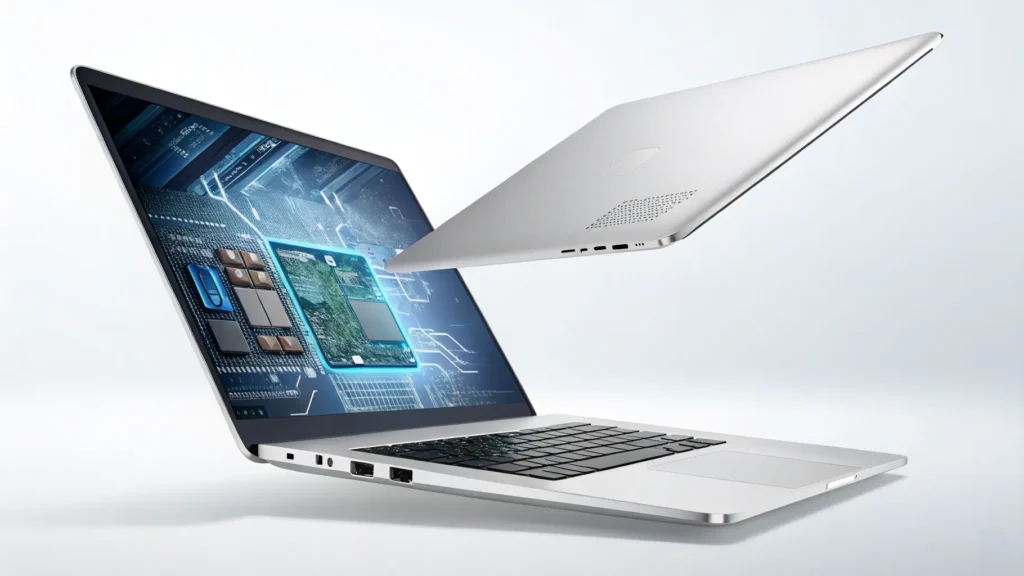
Apple has shipped M1 Macs alongside the Intel versions in their store: same aluminum chassis, two Thunderbolt ports, Touch Bar—the exterior hasn’t changed much. What did change is everything inside. The M1 is a tightly integrated system on a chip (SoC) that combines CPU, GPU, Neural Engine, Secure Enclave and system memory. That level of integration is what makes it feel more like how Apple designs iPhones than how most laptops are built.
“I don’t think we can review the new Apple Silicon versions of these Macs like normal computers anymore.”
That sentence sums it up: paper specs—GHz, RAM by the gigabyte, or milliamp-hour battery numbers—stop being the best way to judge these machines. Instead, you end up judging them by real-world experiences: how responsive the OS feels, how long the battery lasts doing normal tasks, and how smoothly apps run.
Battery life: the headline winner
Of the three big things I wanted to test—performance, battery life, and compatibility—battery life was the one I expected Apple to hit, and they did. Apple claims dramatically longer battery life without changing battery size, and in my use this 13-inch M1 MacBook Pro was astonishing.
- I set it up, charged it to 100%, and then only plugged it in once over a four-day period.
- Total mixed use during that stretch was a little over 10 hours, and the Mac still had 17% battery remaining.
That’s real-world evidence that the efficiency gains enabled by the SoC architecture are substantial. For many people—students, everyday users, even enthusiastic beginners—this battery jump alone is a compelling reason to upgrade.
Performance and benchmarks
The other big promise was performance. On paper Apple showed numbers like 3.5x CPU and 5x GPU improvements for some comparisons. In practice: very impressive.
- Early Geekbench runs (before the app was fully updated) already showed single-core performance above every Intel Mac ever made.
- After Geekbench updated for Apple Silicon, the M1 posted a single-core score around 1744 and a multi-core score around 7600, putting it in league with higher-end, multicore desktop machines.
In day-to-day Big Sur usage, native Apple apps are snappy—the UI is buttery, Safari and Apple’s apps feel exceptionally optimized, and opening larger apps like Chrome or Lightroom felt comparable to, or even faster than, my desktop in some cases.
Storage performance
Drive speeds were also surprisingly fast, which affects everything from app launches to file transfers:
- Writes measured over 3000 MB/s
- Reads over 2500 MB/s
Video export example (Final Cut Pro)
To get a practical sense of real-world performance, I did a 15-minute Final Cut Pro export of gameplay footage across three machines:
- Mac Pro: ~7 minutes 30 seconds
- 16-inch Intel MacBook Pro (Catalina): ~10 minutes 50 seconds
- M1 13-inch MacBook Pro (Big Sur, Apple Silicon-optimized Final Cut): ~12 minutes 50 seconds
Two notes about that test: first, the Intel 16-inch spun its fans up loud during the render; the M1 did not, which raises a question of thermal behaviour and whether the M1 is being conservative with fan curves on the smaller chassis. Second, the M1 isn’t a home-run in every pro task compared to higher-end Macs, but its efficiency and competitive performance are remarkable for a baseline MacBook Pro.
App compatibility: the transition story
Probably the single biggest caveat to buying an M1 Mac right now is the app transition. There are three classes of apps on these new Macs:
- Native (Apple Silicon-optimized) apps: These offer the best experience—high performance and excellent battery efficiency. Native apps are the ideal target for Apple’s vision.
- Intel apps via Rosetta 2 (translated): Apple built Rosetta 2 to run x86 apps on Apple Silicon without developer intervention. In many cases these translated apps run extremely well—sometimes as fast or faster than on Intel hardware—but they aren’t perfect and may have quirks.
- iPhone and iPad apps: Big Sur allows many iOS/iPadOS apps to run on Mac, which increases available software, but remember most are designed for touch-first interaction.
From my experience, the compatibility story is good enough that I’d be comfortable using an M1 Mac as my daily machine—but with two important caveats:
- I ran into one app I use regularly that didn’t work properly: Pixelmator Pro had problems on the M1 unit I tested.
- Some major apps (Photoshop, for example) will run in Rosetta 2 for now and get native M1 versions later—Adobe has said Photoshop’s native version arrives next year.
The safest route for power users and professionals is patience. If your workflow depends on niche apps or a specific plugin, make sure those are confirmed to work natively or reliably under Rosetta before switching.
Other practical notes
- Apple continues to sell Intel Macs alongside M1 models for now—this is a gradual transition.
- External GPU (eGPU) support was dropped in this initial M1 wave—if you depend on eGPUs, that’s important to know.
- Apple will continue rolling out more powerful pro-class Apple Silicon Macs in time (bigger MacBook Pros, iMac Pro equivalents, Mac Pro). The initial M1 Macs are the baseline generation.
Who should buy one right now?
My recommendation is split by use case:
- Everyday users and beginning creators: Go for it. The combination of battery life, performance, and smooth macOS experience makes the M1 MacBook Pro (and MacBook Air/Mac mini options) excellent buys.
- Professionals and established creators: Be patient. If you have a mission-critical workflow, wait until your key apps are confirmed to be optimized or at least reliably supported under Rosetta 2. Also keep an eye on the next-gen pro-class Apple Silicon machines.
Conclusion
The M1 MacBook Pro is a hell of a start. Apple has made a generation-defining architectural move that changes how we think about laptop specs and efficiency. Battery life and day-to-day responsiveness are standout wins. Performance is surprising for a 13-inch laptop, and Rosetta 2 does an impressive job keeping existing apps usable during the transition.
That said, this is the beginning of a transition. There will be some rough edges, some incompatible apps, and some workflows that professionals will want to watch before fully committing. But once the ecosystem catches up, these machines could be scary good.
It’s an exciting time for Mac users—time to recalibrate expectations, and for many people, time to consider upgrading.
Peace.