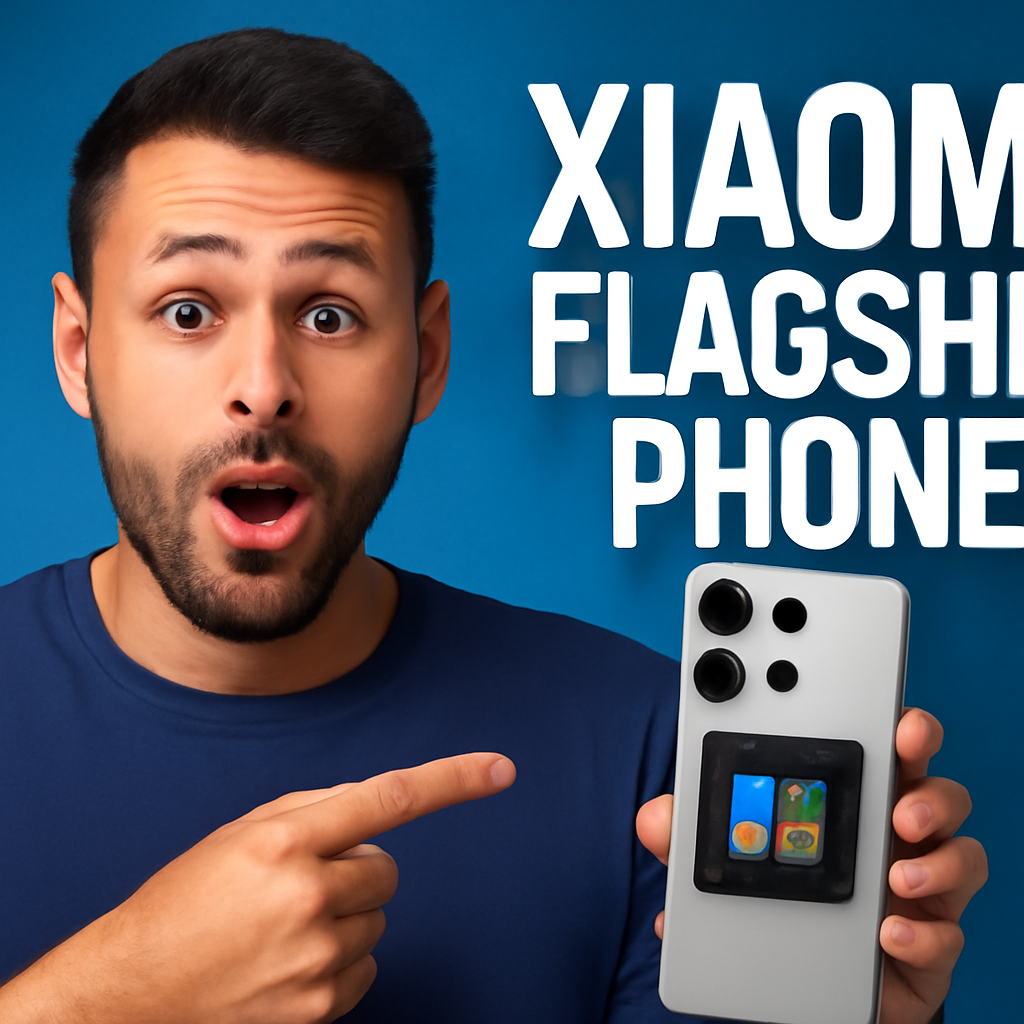

I’m Mrwhosetheboss, and I spent a good chunk of time testing Xiaomi’s next-generation flagship duo: the Xiaomi 17 Pro and the 17 Pro Max. On paper and in marketing, these phones are cheeky — they borrow a lot of cues from Apple’s recent designs and naming. But peel back that deliberate mimicry and you find some genuinely bold hardware choices (most notably a full-featured second display built into the camera plateau) and a package that punches well above its weight.
First impressions: a familiar face with surprising depth
Yes, Xiaomi is intentionally courting comparison with the iPhone 17 Pro line: the numbering, the camera plateau styling and even some UI touches look designed to make you think iPhone when you see the phone in the wild. That strategy is obviously a marketing play — get people to notice and then convert them with substance.
“This is all to make absolute sure that when you think about the iPhone 17 Pros that you also think and maybe even come across Xiaomi.”
But unlike a cheap copy, the Xiaomi 17 Pro and Pro Max feel premium. The displays are bright and uniformly edged with minimal bezels, haptics are satisfying, and everyday interactions feel refined. The phones ship with a respectable bundle as well: a super-tall box, a 100 W charger, a USB-C cable, and a lightly frosted hard case pre-installed.
Unboxing and what’s in the box
- 100 W charger included (yes, in the box)
- USB-C cable
- Pre-installed lightly frosted hard shell case
- Pre-applied screen protectors on both the front and the back screen
Design & hardware fundamentals
Despite the marketing mimicry, Xiaomi nailed the basics. The hand-feel and balance are excellent — the Pro Max is surprisingly light compared to the iPhone 17 Pro Max, even with a massive battery tucked inside. Xiaomi managed this using a silicon-carbon battery with the highest silicon concentration they’ve used so far.
Battery capacities:
- Xiaomi 17 Pro: ~6,300 mAh (about 25% larger than the iPhone 17 Pro Max)
- Xiaomi 17 Pro Max: ~7,500 mAh (roughly 50% larger than comparable recent flagships)
That translates to outstanding endurance — legitimately “take everything from the candy shop” levels of battery life — without making the phones thicker or heavier.
Performance: no compromises
If you assumed Xiaomi traded performance for battery, think again. These phones come with up to 16 GB of very fast RAM, high-end storage, and they’re among the first to use the Snapdragon Elite Gen 5 — the chip expected to power many Android flagships next year.
In benchmarks and real-world use the 17 Pro line sits ahead of this year’s Android flagships, including the Samsung S25 Ultra. Thermal spikes can make the sides feel warm, but sustained performance isn’t noticeably impacted, suggesting Xiaomi’s thermal design evacuates heat effectively.
The star — the camera plateau that’s actually a second display
This is the most talked-about feature for a reason: Xiaomi embedded a second display inside the camera plateau and didn’t half‑measure it. It’s not a tiny notifier — it matches the front display in many key ways: high peak brightness (the “3,000s” of brightness Xiaomi touts), 1–120 Hz adaptive refresh rate, touch responsiveness, and matching cover glass. It even ships with a pre-applied protector so you can put the phone down without worry.
“We have seen rear screens before. We’ve never seen them like this.”
Why this is more than a gimmick
The second display is implemented as a full, functional screen. That means you can use it for personalization, quick controls, and — crucially — as a high-quality viewfinder for selfies using the rear cameras. Because the rear cameras on the 17 Pro phones are legitimately excellent, using them for selfies (via the back screen) suddenly makes Xiaomi’s front-camera results look pedestrian in comparison.
Second screen features — what you can actually do with it
Personalization
Xiaomi went hard on customization. You get a wide range of clock faces (mechanical, minimalist, step counters, and cute animated pets), and you can create your own designs. The background engine is particularly interesting: you can generate AI-driven animated backgrounds from any image. The results are often shockingly usable, turning ordinary photos into polished moving wallpapers.
“This is such an excessively extra piece of software. But I think that’s exactly what this needs.”
Quick utilities
- Music player controls on the back (great when you want to keep your phone face-down while hosting music)
- Pin notes, pictures, or QR codes for quick sharing or reminders
- Text extraction: circle text in an image, and the phone creates a permanent note
- Timer visualized as a liquid depletion animation on the back screen
These small utilities make the rear display genuinely useful in pockets of real-world scenarios — but integration with third-party apps is currently limited (partly because the global software rollout isn’t finished), so broader ecosystem usefulness remains to be seen.
Notifications & calls
The back screen can show notifications so you can remain present (phone face-down) while still catching calls or messages. It even auto-answers calls on speaker when the phone is placed down, but the experience is hampered by the lack of a rear mic — calls handled via the back screen sound “underwater” and are far from ideal. For now, this use case feels like a nice-to-have rather than something replacement-worthy.
Cameras — the real advantage of the rear screen
The camera setup itself isn’t a single revolutionary breakthrough, but it’s consistently excellent: high detail, wide dynamic range, and impressive zoom capability. There are quirks — a skin-tone shift that might be a regional tuning artifact and an ultrawide that’s weaker in low light — but the results are competitive with top-tier 2025 flagship rear cameras.
Where the magic happens is using those same excellent rear cameras for selfies and selfie video via the back display. You retain full camera functionality — all focal lengths, portrait mode, video quality up to 8K for selfie video — and the result is easily the best selfie capture I’ve seen on a phone to date. The phone also offers thoughtful extras like a photo-collage “photo booth” mode that produces Polaroid-style frames and even a one-button “print” option.
Gaming on the back screen: a headline-grabbing oddity
Xiaomi even made a purpose-built gamepad case that clips to the back and is wirelessly powered by the phone. It pairs instantly with the rear screen and provides physical buttons (with a short travel) and a bespoke gaming UI. Games like Angry Birds run smoothly and feel surprisingly good considering the hardware limitations.
That said, it’s niche. The tiny sub-3-inch screen is impressive technically, but unlikely to replace regular handheld gaming or streaming habits. It’s the perfect kind of “press coverage” feature — memorable and curious, but not essential.
So is this the future or clever marketing?
Two plausible reads:
- Xiaomi created an expensive, viral-friendly marketing gambit. Make people think “iPhone” first, then win them over with astonishing battery life and advanced hardware when they inspect the phone more closely.
- Or Xiaomi genuinely believes in a second-screen future and is investing in making it a true multi-purpose surface rather than a novelty.
My take: it’s probably a mix of both. The hardware and fundamental phone experience are solid enough that the second screen can act as a real differentiator rather than merely a party trick. But many of the rear screen’s features still feel like early, slightly overzealous experiments — great for headlines and viral content, less decisive as everyday must-haves (at least for now).
What I loved
- Exceptional battery life (6,300–7,500 mAh, depending on model) without a bulky chassis
- Top-tier performance with Snapdragon Elite Gen 5 and up to 16 GB RAM
- Rear display that equals the front in responsiveness and capabilities
- Best-in-class selfie/video quality when using the rear cameras as a viewfinder
- Thoughtful extras like a bundled 100 W charger, case, and polished UI animations
What held it back
- Some features feel gimmicky or limited until wider app support arrives
- Call handling via the back screen is subpar because there’s no mic there
- Regional camera tuning (this unit is China-only) affects skin tones unless tweaked
- The gaming case is fun, but unlikely to be used regularly by most people
Verdict
On balance, I’m nearly convinced by Xiaomi’s second-screen experiment. The camera use-case alone pushes the idea from novelty toward genuinely useful: having full rear-camera capabilities for selfies and selfie video is a game-changer. Personalization, music controls and the quirky gaming case are icing — sometimes a bit excessive, sometimes delightfully over-engineered.
Whether you’ll love the Xiaomi 17 Pro or Pro Max depends on how much you value those headline second-screen features. If you want killer battery life, flagship performance, and the best selfie/video experience I’ve tested, these phones are an easy recommendation. If you think most of the back-display features are filler, then the core hardware still makes the phones worth considering.